Weightlifting Track: Testing Week — Five 1-Rep Maxes (Snatch, Clean & Jerk, Back Squat, Front Squat, Deadlift)
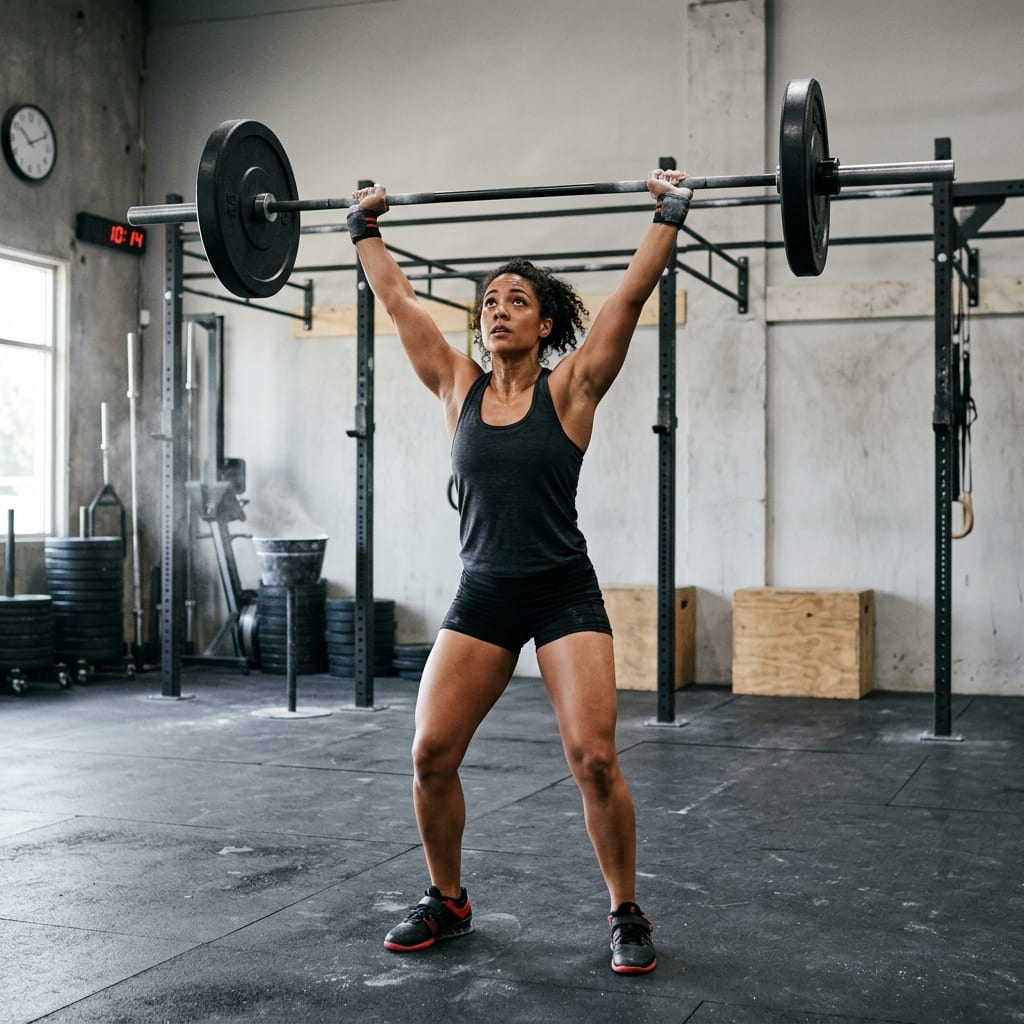
Wednesday, May 13, 2026 | CrossFit MYO, San Jose CA
Testing Week Is Here
Five lifts. Five maxes. One week.
That’s the assignment: Snatch, Clean & Jerk, Back Squat, Front Squat, Deadlift, all at 1-rep max effort. The coaches want you to spread it out. Attack one or two lifts per day, not all five in a single session. Your legs will thank you by Friday.
The order matters. Competition lifts first (Snatch, Clean & Jerk), then strength lifts (Back Squat, Front Squat, Deadlift), then hang and block variations for accessory work if you’re continuing. Warm up thoroughly. Be patient with the build.
The Protocol
TESTING WEEK - Notes
Be thorough with your warm ups. If possible plan to attack 1-2 lifts per day and spread out the days to keep your legs fresh.
- Competition lifts
- Strength lifts
- Hang / block variations
Have fun!
Score type: Not Scored
Snatch 1x1
Snatch for load: 1 rep
Score type: Load
Clean & Jerk 1x1
Clean & Jerk for load: 1 rep
Score type: Load
Back Squat 1x1
Back Squat for load: 1 rep
Score type: Load
Front Squat 1x1
Front Squat for load: 1 rep
Score type: Load
Deadlift 1x1
Deadlift for load: 1 rep
Score type: Load
Barbell Prep - Snatch
Bar only: 6 Muscle snatch + 6 OHS 5 Power snatch + 5 Snatch Bal. 4 Snatch
Light weight 1-2 rounds: 3x Snatch Push Press, 3x Snatch Balance, 3x Hang Snatch, 3x Snatch
Score type: Not Scored
Barbell Prep - Clean & Jerk
Bar only: 6 Muscle cleans + 6 PP 5 Power cleans + 5 FS 4 Clean & Jerks
Light weight 1-2 rounds: 3x Push Press, 3x Front Squat, 3x Hang Clean + Push Jerk, 3x Clean + Jerk
Score type: Not Scored
Full Session Breakdown
| Block | Duration | What You’ll Do |
|---|---|---|
| Warm-Up | 15 min | General movement prep, barbell complex, mobility specific to the lifts you’re hitting today |
| Testing | 30-40 min | Deliberate build to a 1-rep max on 1-2 competition or strength lifts |
| Barbell Prep | 15 min | Snatch and/or Clean & Jerk barbell complex |
Total class time: approximately 60 minutes.
What Makes Testing Week Effective
1-rep max testing isn’t just about recording a number. There’s a real training reason this phase shows up in serious programs.
Your percentages get recalibrated. Every cycle prescribes work at “80% of your 1RM” — but that number means nothing if your baseline is from six months ago. Your lifts have changed. Testing confirms the new baseline.
The nervous system gets trained to recruit maximally. Sub-maximal work builds capacity. Max effort work teaches your body to actually use it. Both phases need each other, and skipping testing is like training for an exam you never take.
There’s a third reason coaches talk about less: testing builds confidence. Knowing your current number, written down, changes how you approach the bar on lighter days. It’s not fluff. It works.
The coach’s note to spread the lifts across the week is deliberate. Five heavy 1-rep maxes in a single session is a central nervous system tax that grinds recovery for days. Two per day is smart. One per day is fine. Don’t stack all five to get it done faster — the point is accurate numbers, not compressed suffering.
Scaling Options
Not everyone tests a true 1RM on every lift. Here’s how to approach this week based on your experience level.
| Lift | Rx (Experienced) | Scaled | Beginner |
|---|---|---|---|
| Snatch | Full squat snatch to max | Power snatch to max | Snatch-grip deadlift + overhead squat practiced separately; no max attempt |
| Clean & Jerk | Full clean + split jerk or push jerk to max | Power clean + push press to max | Front squat to max; skip jerk portion this week |
| Back Squat | 1RM back squat | 1RM at a load where depth is solid throughout | 3-5 rep max; focus on bottom position confidence |
| Front Squat | 1RM front squat | 1RM at a load that keeps torso upright | 3 rep max; prioritize wrist position and elbows up |
| Deadlift | 1RM deadlift with a locked setup | 1RM at a load where setup doesn’t break at the floor | 3-5 rep max; coach reviews setup before loading up |
If you’re newer to Olympic lifting, pushing to a true 1RM on Snatch or Clean & Jerk before technique is solid can lock in bad movement patterns. Talk to a coach first. Building to a heavy triple is a completely valid result for this week.
Movement Glossary
Snatch A barbell is lifted from the floor to overhead in one continuous movement. The bar travels close to the body, the hips extend explosively, and the lifter drops under into a full overhead squat to receive it. One of the most technically demanding lifts in sport. Power snatch (catching above parallel) is the scaled version.
Clean & Jerk Two lifts in one. The clean pulls the bar from the floor to the front rack position, resting on the shoulders. The jerk drives it overhead. In competition, both happen in sequence with a brief pause in the front rack to reset. Split jerk and push jerk are both valid jerk variations.
Back Squat Bar rests on the upper back (traps, not neck). Feet shoulder-width apart, toes slightly out. Hips drop below parallel, then drive through the floor to stand. The baseline strength lift most programs build from.
Front Squat Bar in the front rack: fingertips under the bar, elbows high, bar resting on the shoulders. More demanding on thoracic mobility and core stability than the back squat. Directly transfers to the catch position in the clean.
Deadlift Bar on the floor, feet hip-width. Hinge at the hips, big breath and brace, drive the floor away. The clearest single-number measure of raw strength. Setup matters more than most people expect — a loose position off the floor rarely corrects itself once the bar moves.
OHS (Overhead Squat) Barbell locked out overhead in a wide snatch grip, full squat depth. Requires shoulder mobility, hip mobility, and a lot of body awareness. Shows up in the snatch prep to reinforce the receiving position.
Snatch Balance Bar starts on the back rack. You drop fast into the bottom of an overhead squat while pressing the bar up to lock it out. Trains the speed of the drop in the snatch. Different from a press-out overhead squat because the drop element is the point.
FAQs
Q: What is Testing Week at CrossFit MYO?
A: Testing Week is a scheduled phase in the CrossFit MYO Weightlifting Track where athletes attempt 1-rep maxes on the five major barbell lifts: Snatch, Clean & Jerk, Back Squat, Front Squat, and Deadlift. Results update your training percentages for the next programming cycle.
Q: Should I test all five lifts on the same day?
A: No. The coaches specifically recommend 1-2 lifts per day, spread across the week. Heavy max-effort work drains the nervous system. Spacing it out gets you better numbers on each lift.
Q: What if I don’t have an established 1RM?
A: Work up to a heavy triple or a challenging single without pushing to absolute failure. The goal is a confident, well-executed lift that gives you a real baseline number. Your coach can help you set it.
Q: Is the Weightlifting Track separate from the regular CrossFit WOD?
A: Yes. The Weightlifting Track runs alongside the daily WOD and focuses entirely on barbell skill development, strength, and Olympic lifting. You can train one or both tracks. Talk to a coach about how to structure your week.
Q: Can I drop in for Testing Week?
A: Drop-ins are welcome at CrossFit MYO. Check the schedule at cfmyo.com or book a free class to train with us first.
Q: Where is CrossFit MYO?
A: 3550 Charter Park Drive, San Jose, CA 95136 — near Almaden and Blossom Hill. Parking on-site.
Ready to find out your numbers? Book a free class at CrossFit MYO and test with us this week.
📍 CrossFit MYO | 3550 Charter Park Drive, San Jose, CA 95136